
When people want to improve breath-hold times, they immediately look at CO2 tables, diaphragm stretches, and water technique. While those are obviously fundamental, almost everyone ignores what happens before training even begins. If your baseline physiology is already stressed out by what you just ate, you are fighting an uphill battle before you even start the stopwatch.
Your nervous system is constantly reacting to fuel you put in your body. Digestion alone is a massive physiological undertaking. If your diet keeps you in a sympathetic, wired state, trying to force your body into a parasympathetic calm for a dry training session is going to be incredibly difficult. You want your resting heart rate low and your mind quiet. Food plays a massive role in making that happen automatically.
Here is a breakdown of how to use food to control your physiological baseline, keeping your nervous system down-regulated and ready for breathwork.
One of the most common causes of pre-dive anxiety and a high resting heart rate is a blood sugar crash. When you eat a heavy carbohydrate meal, your blood sugar spikes. Your body responds with a massive dump of insulin to bring it back down. This rapid fluctuation is interpreted by your body as a stress event, triggering a release of adrenaline and cortisol.
If you are dealing with adrenaline, your heart rate elevates and your oxygen consumption goes through the roof. This is exactly what we want to avoid. Keeping your carbohydrate intake controlled, or running a keto-friendly, low-carb approach, keeps your energy incredibly stable. When your blood sugar stays flat, your heart rate stays flat. You avoid those aggressive spikes and crashes, making it significantly easier to drop into a relaxed state when you lie down for a CO2 table.
Magnesium is essentially nature’s relaxant. It directly supports parasympathetic function and is responsible for managing muscle contraction and relaxation. If you are deficient in magnesium, you will likely feel generally wired, and your muscles will be far more prone to cramping. In freediving terms, a lack of magnesium means those early diaphragm contractions will hit harder and feel more aggressive.
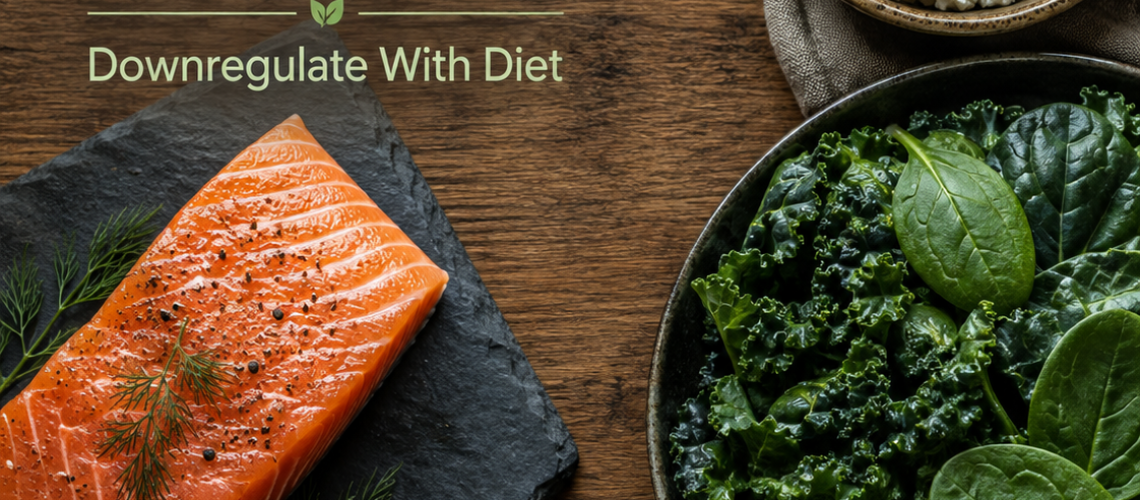
You do not need to overcomplicate how you get it. Keep it simple with whole foods like pumpkin seeds and almonds. They are easy to keep in a cupboard, and they fit perfectly into low-carb or keto meal plans. They give you a steady intake of minerals without messing with your blood sugar levels. Dark leafy greens like spinach are also highly effective. Getting this dialed in means your muscles naturally want to stay loose, rather than holding onto unnecessary tension.
Your brain needs high-quality fats to regulate neurotransmitters that manage stress and mood. Systemic inflammation is another hidden stressor that keeps your nervous system slightly elevated. Omega-3 fatty acids are incredible for reducing this inflammation and helping to keep your resting heart rate low.
Heavy oily fish like mackerel, sardines, and salmon are perfect for this. Eating high-quality fats also helps you feel satiated without the heavy, lethargic feeling that comes after eating processed carbohydrates. When your body is not dedicating massive amounts of oxygen and energy to breaking down heavy, inflammatory meals, that oxygen is available for your breath-hold.
There is a direct physical connection between your gut and your brain called the vagus nerve. This nerve is a primary driver of your parasympathetic nervous system. If your gut is inflamed or struggling to process junk food, it sends stress signals directly up to your brain. You cannot mentally force yourself to relax if your gut is sounding an alarm.
Taking control of your dairy intake is a great way to manage this. Making your own cottage cheese or curds at home is a brilliant practice. It provides clean, highly bioavailable protein to aid recovery after heavy stretching, and because you make it yourself, you know exactly what is in it. There are no hidden preservatives or stabilizers that can irritate your digestive tract. It is simple, functional food that supports recovery without causing internal stress.
Along similar lines, making sugar-free gelatins at home is another great option. It gives you collagen for tissue repair without relying on heavily processed store-bought snacks.
If you are keeping carbs low and avoiding sugar, it is incredibly tempting to lean heavily on artificial sweeteners to fix cravings. You need to be very careful with this, as many of these chemicals cause more problems than they solve.
You should absolutely avoid erythritol and bulked sweeteners. They can cause unwanted physiological stress and disrupt your baseline, pulling you right out of that relaxed state you are working hard to achieve. Your body often doesn’t know how to process these sugar alcohols efficiently, leading to digestive discomfort, which directly impacts that vagus nerve connection we just talked about. Stick to clean, whole foods and avoid trying to hack a sweet tooth with heavy chemicals.
Finally, what you eat only matters if you time it right. Digestion requires a significant amount of blood flow to your stomach. If blood is being routed to your digestive tract, it is not prioritizing oxygen delivery to your brain.
Never do a heavy CO2 table or a deep breath-hold session immediately after a large meal. Give yourself at least two to three hours of digestion time. If you train in the morning, do it fasted.
Hydration is just as critical, but drinking plain water is often not enough, especially if you are eating low-carb. You need sodium and electrolytes to ensure that water actually gets absorbed into your cells rather than just flushing straight through you. A pinch of good quality sea salt in a glass of water an hour before you train helps maintain blood volume and keeps your heart rate stable.
Treat your daily meals as part of your training gear. If you get this sorted, hitting that required state of calm becomes an automatic physiological response rather than a mental battle.
