
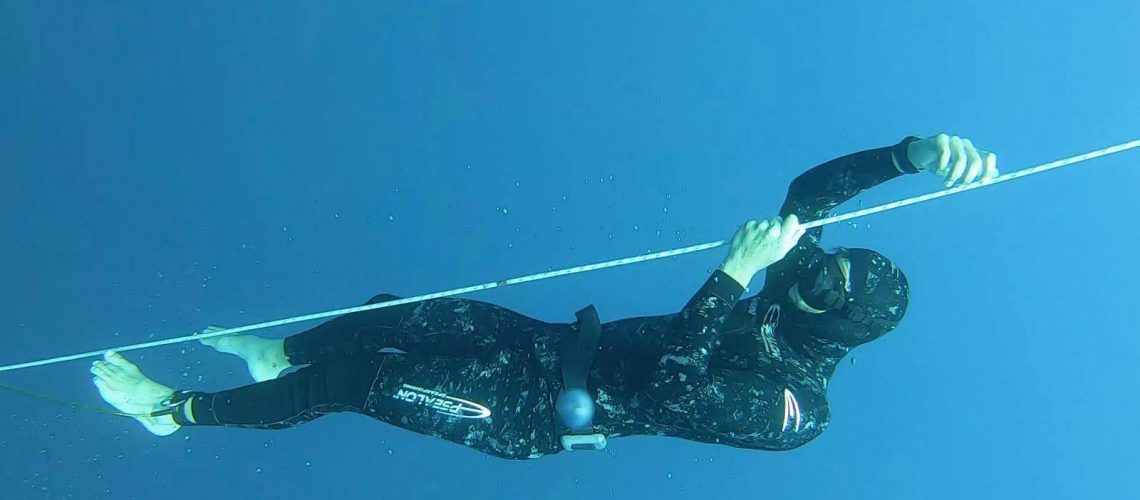
FreediveUK has been teaching freediving for a long time. When I started, there were only about five freediving instructors teaching in the entire country, including me. It was a tiny sport. And I mean genuinely tiny.
We used to travel to places like Malta or Thailand and quite often nobody had ever seen freedivers before. There were only a handful of proper freediving schools internationally and, back in the UK, explaining what I did usually involved first explaining what freediving actually was. Even the mainstream diving industry didn’t really know what to make of us. I remember having a conversation with one of the heads of PADI in the UK about freediving and they simply didn’t see the value in it. At the time it was almost treated as a bit of a joke.
Now look at them.
Freediving has gone from a strange little fringe activity to something recognised by pretty much every major diving agency, taught all over the world and practised by an enormous range of people. It’s been quite something to watch, particularly because FreediveUK grew up alongside a lot of that change.
We started what, as far as I’m aware, were the first regularly scheduled mermaid courses in the world. It sounded faintly ridiculous at the time, but they received a huge amount of publicity and, of course, mermaiding subsequently became an industry in its own right.
Then there was Underwater Foraging: Freediving for Food. Even the phrase “underwater foraging” wasn’t really in use at the time. We coined it because I needed a way of describing what the book was actually about: using freediving skills not just for spearfishing, but for gathering food underwater more broadly. It seems a fairly obvious term now. It wasn’t then.
The book was also an attempt to bridge two worlds that tended to be treated separately: freediving and spearfishing. I wanted to teach people the freediving skills they actually needed to go underwater and forage safely and effectively, rather than assuming they were already freedivers. So I structured the freediving instruction sequentially, building one skill on another in much the same way I would teach somebody in person. As far as I’m aware, it was the first freediving book to approach learning in that way.
Over the years since, I’ve taught thousands of people: complete beginners, experienced freedivers, instructors, spearfishers and people who work professionally in the water. I’ve run more group courses than I could possibly count. So I’ve had a fairly good seat from which to watch freediving change.
And it has changed enormously.
There are now excellent instructors and schools all over the country. Someone wanting to learn to freedive has choices that simply didn’t exist when I started. That’s a good thing. It’s what happens when a sport grows up.
But I’ve changed as well.
I still love teaching freediving and I still love being in the water. There are few things I enjoy more than working with someone on a problem and watching the moment when something they’ve been struggling with suddenly clicks. What I’ve realised, after all these years, is that this is the bit of teaching I enjoy most.
I like coaching. I like watching somebody dive and trying to work out what is happening. I like having the freedom to spend time on something rather than looking at the clock because the group needs to move on to the next part of the course. Sometimes the answer is technical. Sometimes it’s psychological. Sometimes it’s something neither of us expected when we started.
After years of running group courses, I want to spend more of my teaching time doing that. Working with one person, figuring out what they actually need and having enough time to do something useful about it.
So FreediveUK is changing. I’m going to be doing far less general course teaching and concentrating instead on a limited amount of private freediving and spearfishing coaching.
There is an inherent problem with any group freediving course: everybody arrives with different abilities.
One person might be completely comfortable in the water but unable to equalise beyond five metres. Someone else can equalise perfectly but becomes anxious as soon as they start a descent. Another might be naturally relaxed underwater but have terrible technique. They may all have booked exactly the same course, but they don’t need the same things from me.
As an instructor, you adapt as much as you can. That’s part of the job. But there’s an uncomfortable truth about teaching groups that any experienced instructor will recognise: people don’t need equal amounts of your attention.
Sometimes one person needs a lot of help. You give it to them because that’s what they need, but inevitably somebody else gets less of your time. The reverse happens as well. Someone can be struggling with something that really needs an hour of patient one-to-one work, but there are other students waiting to dive and a course that has to keep moving. You help as much as you can, but you can’t always give that person the time the problem actually deserves.
I’ve never particularly liked that compromise. It isn’t bad instruction and it certainly doesn’t mean group courses are bad. I taught them successfully for years and they remain a very good way for most people to learn to freedive. It is simply a consequence of teaching several people at once.
Private coaching removes most of that compromise.
If we discover in the first hour that equalisation is the thing holding you back, we can spend the next three hours on equalisation if that’s what it takes. Nobody is waiting for their turn and we don’t have to move on because somebody else needs to complete something.
Equally, if you pick something up immediately, we move on. There’s no reason to spend another hour practising something you’ve already understood simply because it happens to be on the timetable.
That, for me, is the real advantage of private coaching. It isn’t simply having an instructor to yourself. It’s having the time to follow the problem wherever it leads.
This is probably the other big difference. You don’t necessarily need to come to me because you want a qualification.
You might want one, and I can obviously incorporate certification where appropriate, but I’d much rather start the conversation with a simpler question: what do you want to get better at?
For somebody completely new to freediving, the answer may simply be that they want to learn properly and safely. For an existing freediver it might be equalisation, relaxation, technique, depth progression or getting comfortable in open water again after some time away. An experienced diver might have one very specific problem that has frustrated them for years.
It could also be spearfishing. I’ve taught freediving and spearfishing alongside each other for most of my career, and I regularly hear from people who are already comfortable in the sea, often with a background in scuba or other water sports, but want to learn to spearfish properly and safely. In that situation there is little point pretending everybody needs exactly the same training. We can build the day around what you actually need.
And sometimes we might start the day convinced that we need to work on one thing and discover that something completely different is actually holding you back. That’s fine. We have the time to change the plan.
After doing this for as long as I have, I’ve learned that quite often the thing someone thinks is limiting their freediving isn’t actually the problem. Sometimes a very small technical change makes an enormous difference. Sometimes we need to go back several steps. Occasionally the best thing I can do as an instructor is stop someone trying so hard.
And sometimes I don’t know immediately. That’s part of coaching as well. We try something, see what happens, change it and gradually work out what is actually going on. You don’t always get the opportunity to do that properly when other people are waiting for their turn on the line.
For most people, I think a full private day is a very good place to start. A surprising amount can be achieved when an instructor is working with one person for an entire day, particularly when we’re free to concentrate on the things that actually matter rather than following a predetermined timetable.
A full day of private coaching is £450, including the freediving or spearfishing equipment you need.
For people who want more time, I also offer a two-day private programme for £800, which is £100 less than booking two individual days. Two days gives us considerably more room to develop things. The first day lets me see how you actually dive, identify the important areas to work on and start making changes. The second gives us the opportunity to build on those changes while they’re still fresh.
I also work with pairs who want to train together, but I’m deliberately keeping numbers small. Once we start adding more people, we’re simply recreating a group course, which rather defeats the point.
Private coaching won’t make sense for everybody. If your main priority is getting a freediving qualification as cheaply as possible, there are good group courses available and that is probably the route I would recommend. I’m not trying to compete with them.
This is for people who specifically want individual coaching and the time to work on their own diving.
I’m deliberately going to be teaching fewer recreational freediving days than I have in the past. Alongside teaching, much of my work these days involves specialist water safety and risk management for film and television, and I’m also spending more of my time writing and developing other projects.
But I don’t want to stop teaching freediving.
Freediving has been a huge part of my life. I’ve been fortunate enough to watch this strange little sport grow from something hardly anybody had heard of into what it is today. Teaching it has given me experiences, friendships and opportunities I would never have had otherwise, and after all this time I’m still fascinated by it.
I just want to teach differently.
I want the time to notice the little things, to change the plan when something isn’t working and to spend two hours fixing something if it needs two hours, rather than twenty minutes because somebody else is waiting.
And, occasionally, I want to spend a day in the water with someone who simply wants to become a better freediver.
Fewer people. More time. Interesting problems. Good days in the water.
That feels like a pretty good way to continue.
